Beaches and rivers around Africa given spring clean in mass campaign

Coca-Cola Beverages Africa (CCBA) is leading extensive beach and river cleanups across the African continent this month as part of the International Coastal Cleanup initiative to remove plastic waste from the environment and raise awareness of the need to recycle.

Teams of volunteers supported by CCBA have rallied across South Africa, Namibia, Mozambique, Ghana, Zambia, Kenya, Uganda and Ethiopia to collect plastic waste.

Every year, on the third Saturday of September, volunteers around the world take part in the world’s biggest coastal clean-up, International Coastal Cleanup Day.

“Food and beverage packaging is an important part of our modern lives, yet the world has a packaging problem, which we as CCBA, together with The Coca-Cola Company, have a responsibility to help solve,” said Tshidi Ramogase, CCBA Chief Public Affairs, Communication and Sustainability Officer.

“To encourage more people to recycle more often, we’re investing to help people understand what to recycle, how to recycle, and where to recycle. As part of International Coastal Cleanup Day, we are working with local communities and NGOs across Africa to highlight this critical issue.

“These clean ups help shift attitudes towards littering and recycling, encourage environmentally responsible waste-management habits and motivate communities across the continent to recycle,” Ramogase said.

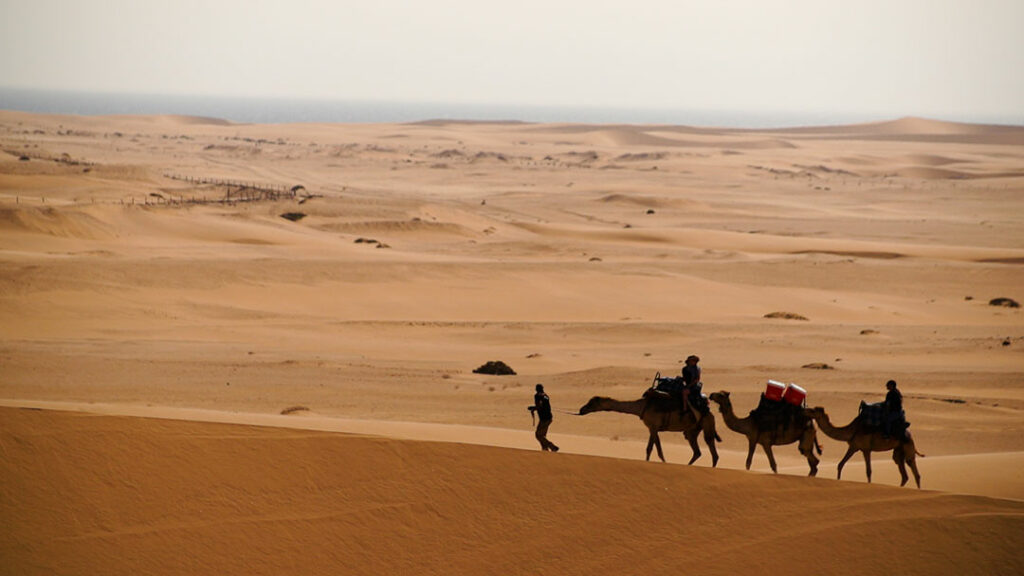
In Namibia, Coastal Cleanup Day coincides with national cleanup day so the whole country is involved, as well as the Ministry for the Environment. CCBA will be doing cleanups over September in Windhoek, Otjiwarongo, Keetmanshoop, Walvis Bay and Oshakati. In South Africa there are cleanups in Enseleni, Richards Bay, Durban, Gqeberha, East London and Port Shepstone.

In Ghana, CCBA subsidiary Voltic partnered with the University of Ghana Plastic Recycling Project and a recycling company to clean up Laboma Beach.

In Zambia, CCBA partnered with the Siavonga City Council to conduct a clean-up exercise at Lake Kariba. In Ethiopia, CCBA joined forces with a youth-led organisation called Green Rotaract Concept and cleaned up the Little Akaki River in Addis Ababa.

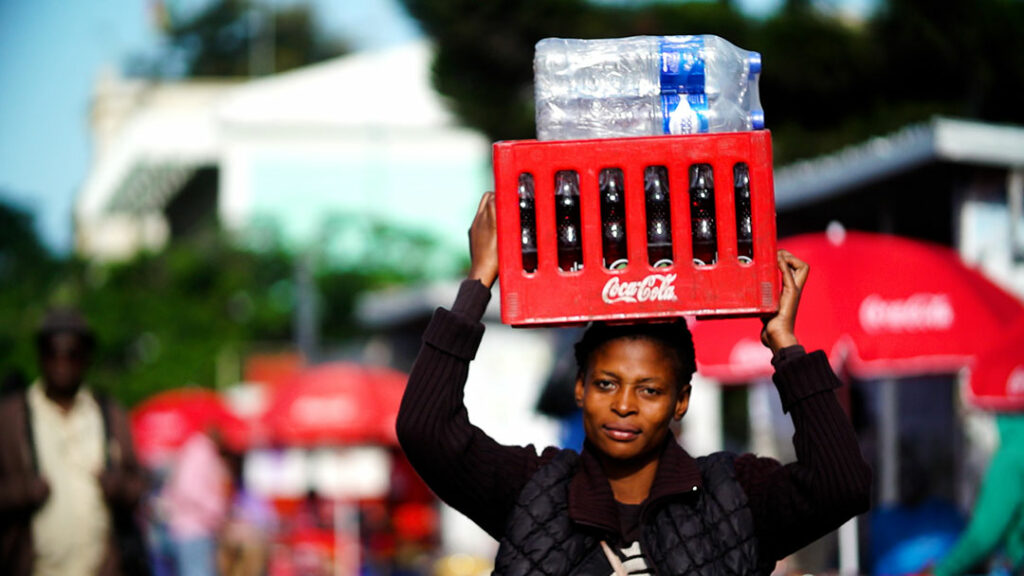
The team in Mozambique not only held a volunteer clean up, but also had an educational workshop with well-known environmentalist, Carlos Serra, to help increase awareness of the need to develop good recycling habits.

Ramogase added: “While increasing recycling rates and using more recycled content in packaging is key, it is equally important to dramatically increase the collection of post-consumer waste and prevent it from ending up in rivers and oceans.

“This requires a mass awareness campaign to shift consumer behaviour. We’re bringing people together through programmes like beach and river cleanups and other ongoing local activities.”

CCBA aims to help make the world’s packaging problem a thing of the past, working in partnership with The Coca-Cola Company which launched a sustainable packaging initiative called World Without Waste in 2018. CCBA aims to help collect a bottle or can for every one it sells by 2030, to make all its packaging recyclable and have 50% recycled content in its packaging by 2030, and make 25% of its packaging reusable by 2030.

Related Media Releases

Recycling Heroes Project to support packaging collection and economic inclusion in northern Namibia

Coca-Cola Beverages Africa (CCBA) in Namibia, in collaboration with local authorities, recyclers and the Recycling Namibia Forum (RNF), has launched the 2026 Recycling Heroes Project in Rundu and Ondangwa. This community-focused initiative aims to strengthen packaging collection and recycling practices while contributing to economic inclusion in two of Namibia’s growing towns.

Trust: The Foundation of Sustainable Business Success

An Opinion Editorial from Kirunda Magoola, Public Affairs, Communication and Sustainability Director at Coca-Cola Beverages Uganda

Seasoned Industry Leader Henry Friedrich Returns to the Coca-Cola System to Lead CCBA in Namibia

Coca-Cola Beverages Africa (CCBA) in Namibia has announced the appointment of Henry Friedrich as its new General Manager.
Frank O’Donnell

Chief Commercial and Customer Officer, CCBA

Frank leads CCBA’s commercial agenda, with responsibility for accelerating revenue growth, strengthening route to market and customer partnerships and driving execution excellence across markets.

Frank brings extensive international experience from Coca‑Cola HBC, where he held a range of senior commercial and general management roles. Most recently, he served as Region Director, overseeing 13 markets across Europe, where he led high-performing teams and delivered strong business results.

He is recognised for his strong commercial acumen, customer focus and track record in building high-performing teams across diverse markets.

Gerald Lewis

Chief Information Officer, CCBA

Gerald leads CCBA’s digital, data and technology agenda, focusing on enabling business performance through scalable platforms and enhanced digital capabilities.  Gerald brings extensive international experience, most recently as Head of Technology Strategy & Operations at Coca‑Cola HBC. He has also held senior CIO roles at Bacardi across Africa, the Middle East and Asia, as well as transformation roles at GlaxoSmithKline and Mettler Toledo. He is recognised for translating technology strategy into business value and for leading transformation across emerging markets.

Matthew Welz

General Counsel and Company Secretary, CCBA

Matthew joined us from the Clicks Group, a JSE Top-40 company, where he has been the Head of Legal and Company Secretary since 2016. In this role Matthew successfully navigated a highly regulated environment, including overseeing compliance with company laws and the JSE Listings Requirements. As company secretary, he managed governance at Board level as well as being the Chairman’s chief of staff. Prior to this, Matthew was a Legal Manager with Anglo American, a major multinational diversified mining group, which includes three companies listed on the JSE, with extensive operations across Southern Africa.

CCBA Zambia Hero

Zambia

Coca-Cola Beverages Zambia (CCBZ) became a subsidiary of CCBA in 2018.
CCBA Uganda Hero

Uganda

CCBA’s Ugandan subsidiary, Coca-Cola Beverages Uganda Limited (CCBU), has a 24-year track record in Uganda.
CCBA Tanzania Hero

Tanzania

Coca-Cola Kwanza is a subsidiary of CCBA covering 54% of Tanzania’s geography and employing over 500 people.
CCBA Namibia Hero

Namibia

The Coca-Cola system in Namibia, has a 70-year track record providing Coca-Cola brands tailored for consumer preferences.
CCBA Mozambique Hero

Mozambique

With more than 30 years serving the country, Coca-Cola Sabco Mozambique (CCSM) is a subsidiary of CCBA.
CCBA Comoros Mayotte Hero

Mayotte

The islands represent CCBA’s presence in Comoros and Mayotte.

Malawi

In 2022, CCBA acquired the soft drinks division of the Castel (Southern Bottlers Limited) in Malawi through a new entity called Coca-Cola Beverages Limited (CCBL).
CCBA Where We Operate Hero

Kenya

In one of East Africa’s largest-ever private equity investments, CCBA acquired 100% shareholding in Nairobi Bottlers Limited (NBL) in October 2019.
CCBA Ethiopia Employee

Ethiopia

East Africa Bottling Share Company (EABSC), a subsidiary of CCBA, is the largest bottler of Coca-Cola products in Ethiopia, having served the country for more than 60 years.
CCBA Eswatini Hero

Eswatini

In August 2019, CCBA subsidiary, Eswatini Coca-Cola Beverages, commenced operations with a refreshed marketing and sales plan, based on Coca-Cola Beverages South Africa’s success.
CCBA Comoros Mayotte Hero

Comoros

The islands represent CCBA’s presence in Comoros and Mayotte.
CCBA South Africa Where We Operate

South Africa

CCBA’s proudly South African subsidiary, Coca-Cola Beverages South Africa (CCBSA), has 11 manufacturing plants across 6 provinces.
CCBA Botswana Hero

Botswana

Based in the capital, Gaborone, CCBA’s Botswana subsidiary, which trades as Coca-Cola Beverages Botswana (CCBB), offers improved service and accelerated innovation for both the formal and informal markets.