Transport Operators Drive Through Turmoil

Transportation Owners and Drivers critical to reaching customers in South Africa and across the border, learn from social unrest and economic crisis

South Africa, 21 October 2021 – As South Africa grapples with the devastation of the pandemic and destructive protests, transport operators must seek ways to not only survive the impact of these adverse conditions but grow beyond them. But they will need help to do so.  

As the country marks National Transport Month, Logistics Manager at Coca-Cola Beverages South Africa (CCBSA), Ndanganeni Adjei reflects on the need for companies and government to demonstrate their commitment to the sector by bolstering investments into the country’s logistics network, while ensuring the safety and sustainability of workers.

“When violent protests erupt, it is usually transport operators and truck drivers who face the brunt of the ire of mobs in the streets,” says Adjei. “During the wake of violent social unrest that erupted in parts of KwaZulu-Natal and Gauteng, we were immensely affected in both provinces, as well as in the Eastern Cape, with our deliveries to our customers, as well our supply of raw materials, being delayed.”

“We can never be prepared enough for such events, and the best you can do is to mitigate the impact through increased vigilance and more thorough security measures. At the end of the day, our employees’ lives come first, and we need to work as a collective within the industry to ensure we play our role in positively contributing to the growth of our economy while minimising risk,” he adds.

To adapt and survive in the current environment, characterised by economic stagnation and an increase in volatility in communities, CCBSA has made a comprehensive realignment of its Owner Driver programme over the past year. This has already led to greater efficiencies, as well as profitability for operators who have achieved higher productivity through more relevant market targeting.

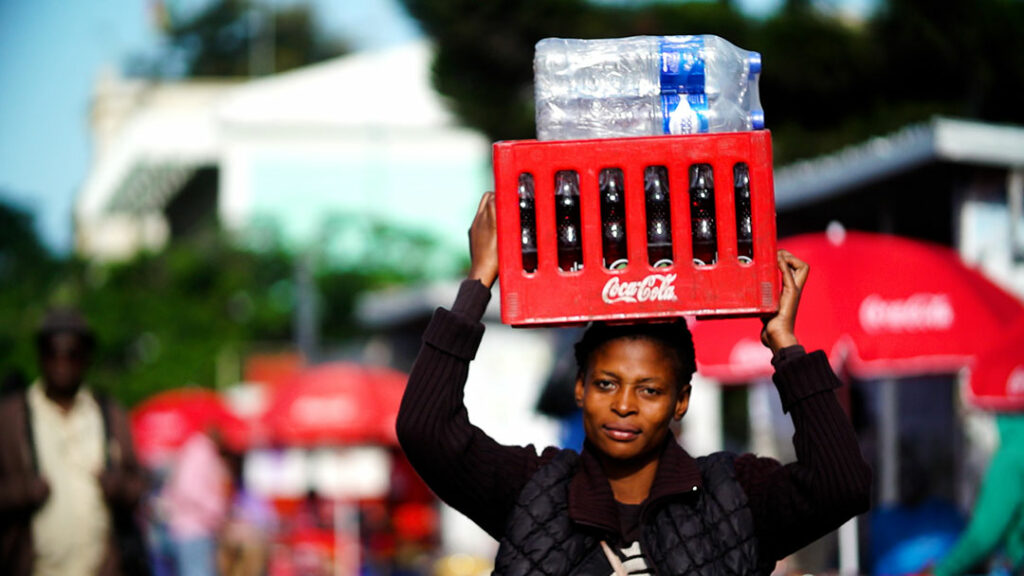
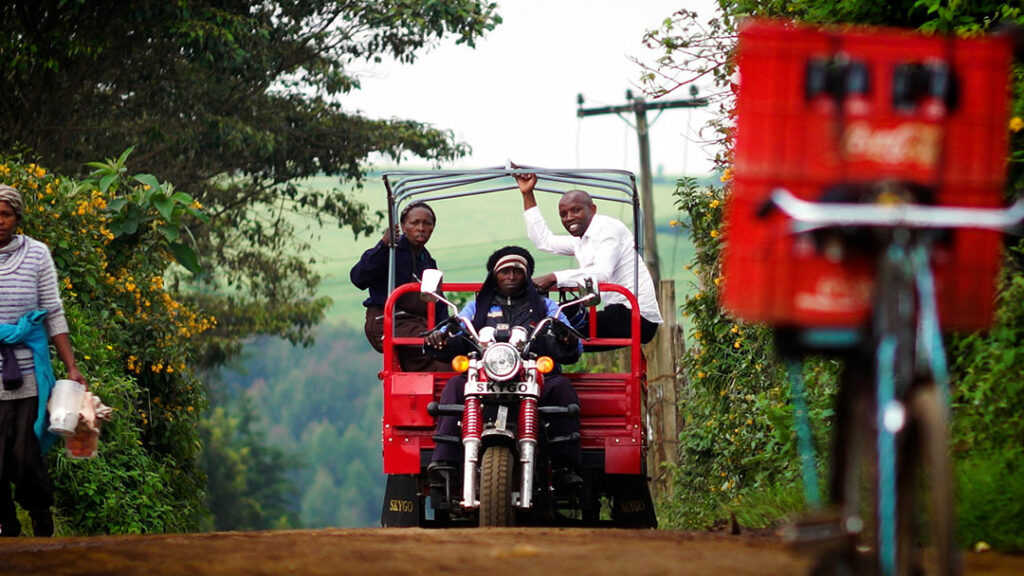
“Our Owner Drivers are extremely important to our route to market strategy.  They are the ones who have endured some of the greatest pressure throughout the pandemic, as they are essential service workers who were on the ground engaging customers directly, as they are unable to work remotely,” says Adjei. “Our Owner Driver Scheme has been a vital part of our ability to serve our South African and cross-border channels.”

“The challenges of the past year have affected these transport operators directly, as our volumes took a major knock due to lockdowns, but we are confident that we are on a strong path of recovery and look forward to supporting operators in getting their businesses to become sustainable and meet their full potential,” says Adjei.

The Owner Driver Scheme was established in 1993 as a central part of the Amalgamated Beverage Industries (ABI) distribution channel. This, coupled with South Africa’s development mandate, would provide previously disadvantage groups the economic opportunity to be a part of the supply chain of a major industrial operation.

The Scheme continued to run following the 2016 merger of six non-alcoholic ready-to-drink beverage companies, which formed Coca-Cola Beverages Africa (CCBA), of which CCBSA is a subsidiary. Adjei added   existing owner dri

Related Media Releases

Recycling Heroes Project to support packaging collection and economic inclusion in northern Namibia

Coca-Cola Beverages Africa (CCBA) in Namibia, in collaboration with local authorities, recyclers and the Recycling Namibia Forum (RNF), has launched the 2026 Recycling Heroes Project in Rundu and Ondangwa. This community-focused initiative aims to strengthen packaging collection and recycling practices while contributing to economic inclusion in two of Namibia’s growing towns.

Trust: The Foundation of Sustainable Business Success

An Opinion Editorial from Kirunda Magoola, Public Affairs, Communication and Sustainability Director at Coca-Cola Beverages Uganda

Seasoned Industry Leader Henry Friedrich Returns to the Coca-Cola System to Lead CCBA in Namibia

Coca-Cola Beverages Africa (CCBA) in Namibia has announced the appointment of Henry Friedrich as its new General Manager.
Frank O’Donnell

Chief Commercial and Customer Officer, CCBA

Frank leads CCBA’s commercial agenda, with responsibility for accelerating revenue growth, strengthening route to market and customer partnerships and driving execution excellence across markets.

Frank brings extensive international experience from Coca‑Cola HBC, where he held a range of senior commercial and general management roles. Most recently, he served as Region Director, overseeing 13 markets across Europe, where he led high-performing teams and delivered strong business results.

He is recognised for his strong commercial acumen, customer focus and track record in building high-performing teams across diverse markets.

Gerald Lewis

Chief Information Officer, CCBA

Gerald leads CCBA’s digital, data and technology agenda, focusing on enabling business performance through scalable platforms and enhanced digital capabilities.  Gerald brings extensive international experience, most recently as Head of Technology Strategy & Operations at Coca‑Cola HBC. He has also held senior CIO roles at Bacardi across Africa, the Middle East and Asia, as well as transformation roles at GlaxoSmithKline and Mettler Toledo. He is recognised for translating technology strategy into business value and for leading transformation across emerging markets.

Matthew Welz

General Counsel and Company Secretary, CCBA

Matthew joined us from the Clicks Group, a JSE Top-40 company, where he has been the Head of Legal and Company Secretary since 2016. In this role Matthew successfully navigated a highly regulated environment, including overseeing compliance with company laws and the JSE Listings Requirements. As company secretary, he managed governance at Board level as well as being the Chairman’s chief of staff. Prior to this, Matthew was a Legal Manager with Anglo American, a major multinational diversified mining group, which includes three companies listed on the JSE, with extensive operations across Southern Africa.

CCBA Zambia Hero

Zambia

Coca-Cola Beverages Zambia (CCBZ) became a subsidiary of CCBA in 2018.
CCBA Uganda Hero

Uganda

CCBA’s Ugandan subsidiary, Coca-Cola Beverages Uganda Limited (CCBU), has a 24-year track record in Uganda.
CCBA Tanzania Hero

Tanzania

Coca-Cola Kwanza is a subsidiary of CCBA covering 54% of Tanzania’s geography and employing over 500 people.
CCBA Namibia Hero

Namibia

The Coca-Cola system in Namibia, has a 70-year track record providing Coca-Cola brands tailored for consumer preferences.
CCBA Mozambique Hero

Mozambique

With more than 30 years serving the country, Coca-Cola Sabco Mozambique (CCSM) is a subsidiary of CCBA.
CCBA Comoros Mayotte Hero

Mayotte

The islands represent CCBA’s presence in Comoros and Mayotte.

Malawi

In 2022, CCBA acquired the soft drinks division of the Castel (Southern Bottlers Limited) in Malawi through a new entity called Coca-Cola Beverages Limited (CCBL).
CCBA Where We Operate Hero

Kenya

In one of East Africa’s largest-ever private equity investments, CCBA acquired 100% shareholding in Nairobi Bottlers Limited (NBL) in October 2019.
CCBA Ethiopia Employee

Ethiopia

East Africa Bottling Share Company (EABSC), a subsidiary of CCBA, is the largest bottler of Coca-Cola products in Ethiopia, having served the country for more than 60 years.
CCBA Eswatini Hero

Eswatini

In August 2019, CCBA subsidiary, Eswatini Coca-Cola Beverages, commenced operations with a refreshed marketing and sales plan, based on Coca-Cola Beverages South Africa’s success.
CCBA Comoros Mayotte Hero

Comoros

The islands represent CCBA’s presence in Comoros and Mayotte.
CCBA South Africa Where We Operate

South Africa

CCBA’s proudly South African subsidiary, Coca-Cola Beverages South Africa (CCBSA), has 11 manufacturing plants across 6 provinces.
CCBA Botswana Hero

Botswana

Based in the capital, Gaborone, CCBA’s Botswana subsidiary, which trades as Coca-Cola Beverages Botswana (CCBB), offers improved service and accelerated innovation for both the formal and informal markets.